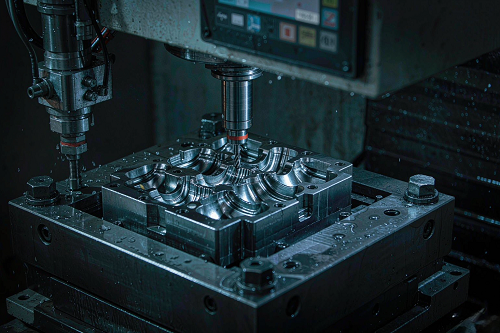
High-feed cutters use a very small axial depth with a high feed per tooth, and their shallow entry angle directs cutting force axially into the spindle rather than radially into the tool. The result is stable roughing at long overhangs and on machines with limited rigidity.
Conventional shoulder milling still wins when you need a clean vertical wall in one pass, when axial depth is available, or when the pocket is too narrow for the high-feed tool path. Compare metal removal rate on your actual geometry — not the catalog's headline feed number — before switching.
Starting values for each product are listed on its model page.